Obd2 Eobd Jobd Differences Uk Japanese Import
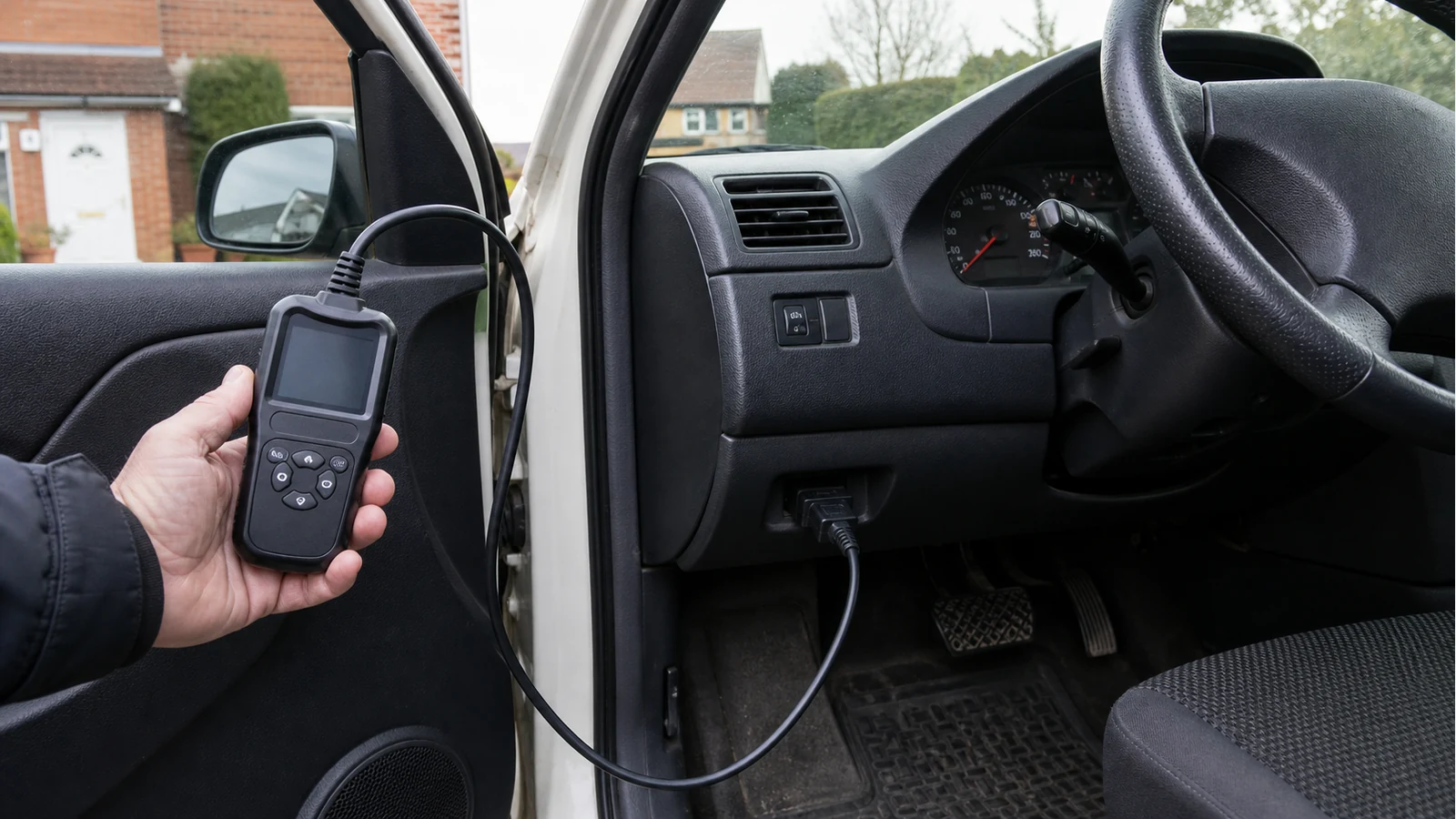
OBD2, EOBD and JOBD are not three different socket shapes. For a UK Japanese import buyer, the practical difference is the diagnostic language the car and scanner can agree on. A grey import may have the familiar 16-pin connector and still refuse to talk to a generic reader if the tool does not support the protocol path the vehicle expects.
Why the same plug can still fail
The physical port is only the start of the conversation. Public OBD explainers describe JOBD as the Japan-market diagnostic variant, while EOBD is the European implementation and OBD2 is the wider North American term many buyers use loosely. Auto Lines explains that JOBD is used for Japanese domestic market vehicles; UK OBD guidance also notes that regional systems can share a connector while requiring compatible software support, not just the right plug shape.
That is why a cheap OBD2 reader can appear fine on a UK-sold Honda or Mazda, then show a connection error on a Japan-market Nissan Elgrand, Toyota Estima or similar import. The scanner has power from the car, but it has not established the right diagnostic conversation.
A plain comparison
| Label | Usual buyer meaning | Where UK owners feel it | Common wrong assumption |
|---|---|---|---|
| OBD2 | Generic shorthand for modern onboard diagnostics | Often works for UK and US-market compatible powertrain codes | Any OBD2-labelled reader must work on every 16-pin car |
| EOBD | European emissions diagnostic implementation | Relevant to many UK and European-market vehicles | A Japanese badge automatically means the same protocol on imports |
| JOBD | Japan-market diagnostic path | Important when a UK-owned grey import will not communicate with a generic reader | JOBD support means every module and every model year is covered |
How to decide what you need
Start with the vehicle, not the tool listing. Confirm whether the car was originally sold into the UK or imported from Japan, then note its model year and engine. If a previous reader failed to connect, record the exact failure: no power, no communication, or no codes found. Those mean different things.
UK Alphard and Vellfire owners discuss this issue in protocol terms rather than just brand terms; the Alphard Club UK diagnostic reader thread is a useful example of owners separating OBDII and JOBD questions before buying equipment.
- If the car is a UK-sold Japanese model with an engine management light, a standard EOBD/OBD2-capable reader may be enough for basic engine codes.
- If the car is a Japan-market import and generic readers have failed, prioritise JOBD support and model-year checking.
- If the job involves ABS, airbag, immobiliser, coding or service functions, protocol labels alone are not enough; look for an all-system tool or professional diagnostic support.
When the JP700 route is relevant
If your job is limited to engine-code reading on a compatible Japanese or JDM import, a stand-alone JOBD-aware handheld reader can be a sensible first tool. Check the current engine-code scope and compatibility wording on the Japanese car scan tool product page before ordering, especially if your car is an unusual year, import grade or modified ECU setup.
Related reading
For the boundary between engine-only tools and broader workshop platforms, see engine-only vs full-system scanners for UK Japanese cars. If the light is on before a test, read the MOT-week EML checklist before clearing anything.